Introduction to dedicated low-temperature spray dryer for fermentation mycelium
Source: 本站 | Release date:
2026-09-14 02:09:30
| View: 2
Summary:
The dedicated low-temperature spray dryer for fermentation biomass targets probiotics, yeast, bacillus, lactic acid bacteria, and other fermentation microorganisms. It addresses issues such as microbial inactivation, protein denaturation, and wall sti…
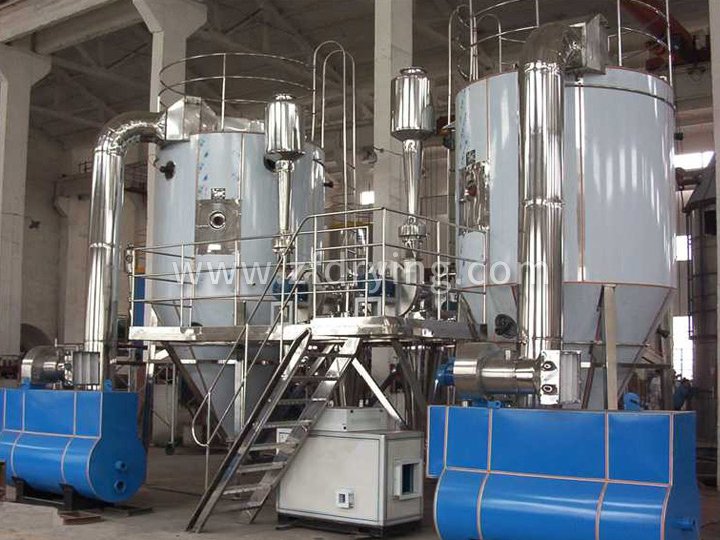
The dedicated low-temperature spray dryer for fermentation biomass targets probiotics, yeast, bacillus, lactic acid bacteria, and other fermentation microorganisms. It addresses issues such as microbial inactivation, protein denaturation, and wall sticking that occur during conventional high-temperature spray drying. With its low temperature and instantaneous drying capabilities, the fermentation broth can be directly and continuously converted into microbial powder, balancing activity and mass production efficiency.
Working Principle
The fermented mycelium slurry is pumped into an atomizer and atomized into micron-sized droplets. A dehumidified, clean, low-temperature hot air (inlet air temperature 35~90°C) is used to contact the droplets in parallel flow, achieving instantaneous dehydration within seconds. The evaporation of water takes away heat, resulting in the actual temperature of the mycelium being much lower than the temperature of the hot air. The dried powder is collected via a cyclone + bag filter; the exhaust gas is condensed and dehumidified, and some models can be equipped with closed-loop nitrogen protection to isolate oxygen and prevent oxidation.
Core features (specially designed for bacterial cells)
1. Protect the activity of the bacterial cell
Different from conventional spray drying with 160℃+ air inlet, this process utilizes low-temperature dehumidified air to reduce thermal shock and significantly enhance the survival rate of live bacteria, making it suitable for heat-sensitive strains. The atomization structure is optimized to reduce shear force and prevent bacterial cell breakage.
2. Continuous production, with efficiency far higher than freeze-drying
Continuous operation of feeding → atomization → drying → powder collection; compared to freeze-drying, it has high production capacity and low energy consumption, making it suitable for large-scale bacterial cell processing in fermentation workshops.
3. Good powder quality
The finished bacterial powder is uniform in granules, exhibits good fluidity, and dissolves quickly; it can reduce wall sticking, and is equipped with a cooling structure for the tower wall and a wall-sticking prevention purging structure.
4. Clean and closed system
Multi-stage air filtration (initial + medium + high efficiency), with the entire machine made of 304/316L stainless steel; capable of CIP (Cleaning In Place) online cleaning to prevent cross-contamination, meeting food/biological fermentation GMP requirements.
5. Precise temperature control
PID closed-loop temperature control, real-time monitoring of inlet air, outlet air, and multiple points within the tower; can be paired with a dehumidification unit for discharging in a low-humidity environment to prevent moisture absorption and agglomeration of bacterial powder.
6. Optional nitrogen closed-loop
For anaerobic and easily oxidizable bacterial cells, a closed nitrogen cycle is employed to isolate them from oxygen and preserve their activity.
Applicable Materials
- Probiotic fermentation broth: Lactic acid bacteria, Bifidobacterium, Bacillus subtilis
- Yeast biomass: brewer's yeast, candida, yeast extract fermentation broth
- Bio-fertilizer bacterial cultures, microbial preparations, enzyme preparation fermentation broth
- Mycoprotein, biological feed mycelium raw material